
The Craft
Silk, gold and meaning
What goes into a Kanchipuram — and how to keep one for the next generation.
Korvai
Two pieces of silk that never let go.
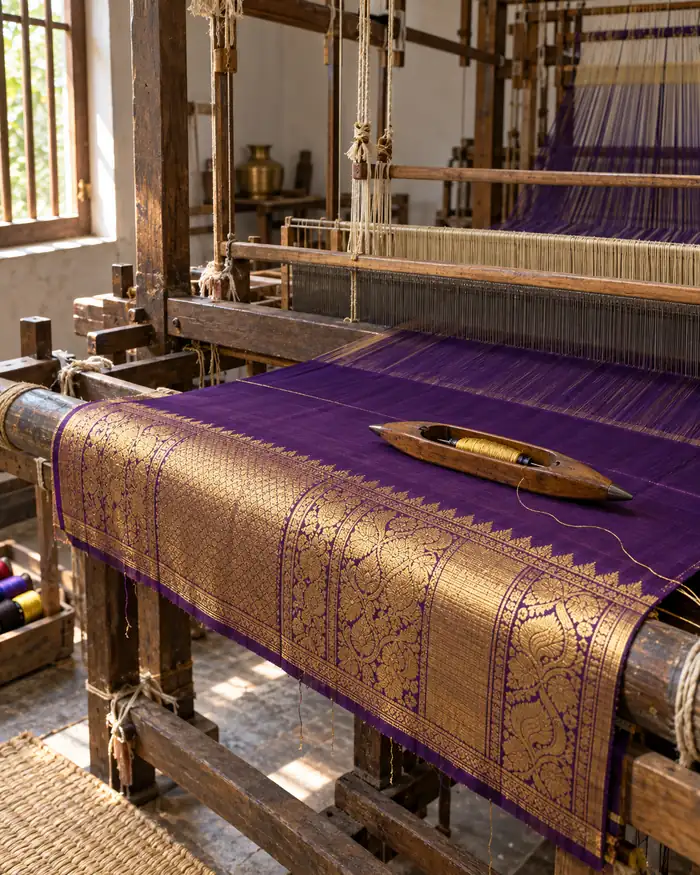
The body and the contrasting border are woven at the same time with separate shuttles, then interlocked thread by thread where they meet. Drag to see the join.
Motifs
Every motif carries a meaning.
-
Maanga Mango
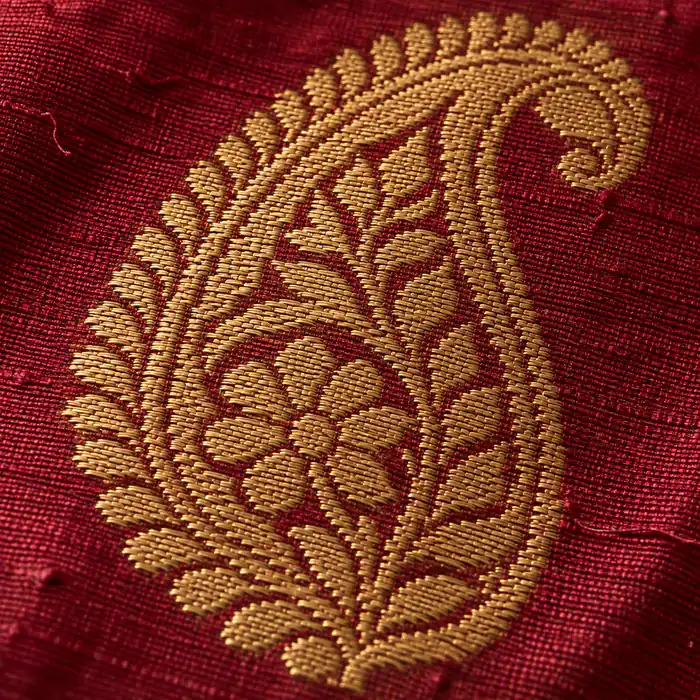
The mango, curled like a paisley — abundance, fertility and a full home.
-
Mayil Peacock
Grace and beauty; the peacock carries Lord Murugan.
-
Annam Swan
The mythic swan said to part milk from water — wisdom and discernment.
-
Gopuram Temple tower
The temple towers of Kanchi, woven into the border — devotion and protection.
-
Rudraksham Sacred bead
The beads of Shiva, strung along the border — faith that holds.
-
Thamarai Lotus
Purity rising from still water; the seat of Lakshmi — grace and prosperity.
Know it's real
Why Kanchipuram sarees are so special.
GI
Geographical Indication
Kanchipuram silk has been a Government of India Geographical Indication since 2005–06 — the name belongs to sarees woven to its rules.
Silk
Pure mulberry silk
The GI rules call for pure mulberry silk: heavy, cool to the touch, with a deep lustre that shifts as it moves.
Zari
Silver plated with gold
Real Kanchipuram zari is silver thread plated with gold. Ask for the zari details of any saree you love.
Korvai
Border and pallu, interlocked
Border and pallu are joined to the body with the korvai technique — look for the even interlock where colours meet.
Source: Kancheepuram District, Government of Tamil Nadu — GI product: Kancheevaram silks and sarees.
Care
Keep it for the next generation.
Store
Wrap it in a soft cotton or muslin cloth, never plastic, so the silk can breathe.
Refold
Change the folds every few months so the zari doesn't crease along one line.
Clean
Dry clean only. Keep perfume and deodorant away from the zari.
Air
Air it in the shade after wearing — sunlight fades the colour.